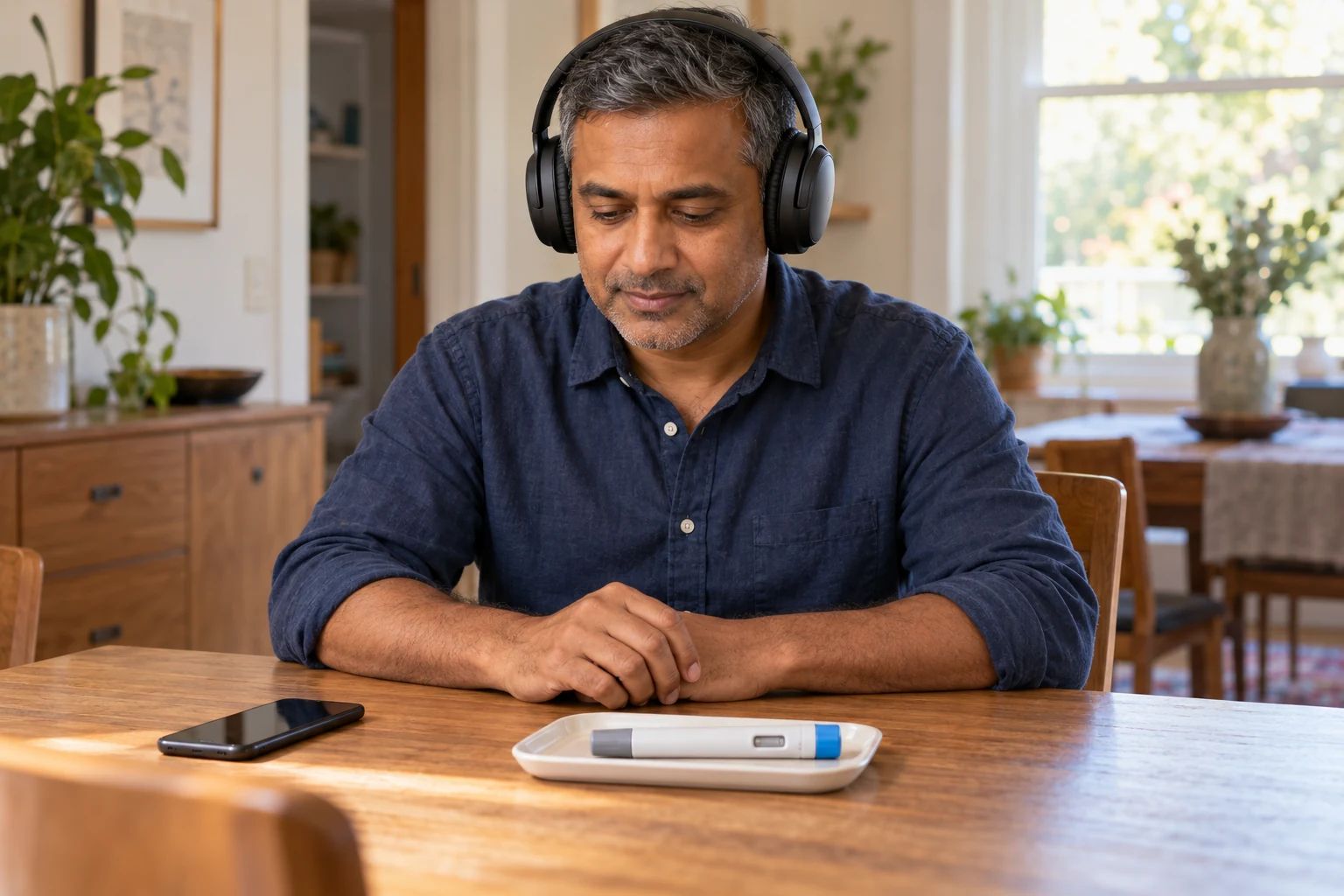
Finding a manageable start
Reduce the work of getting help.
Keep onboarding steps clear, make content accessible and let patients choose how they would like to be contacted.
The right experience starts with the specific condition and the person using it. Make guidance manageable, respect communication preferences and give patients and authorized caregivers clear ways to get help.

Begin with the moments specific to this treatment journey. Then connect the experience around them.
Finding a manageable start
Keep onboarding steps clear, make content accessible and let patients choose how they would like to be contacted.
When participation changes
A change in interaction could reflect symptoms, digital fatigue, a caregiver change or a preference for another channel. Patient-shared context helps guide the next step.
When another person is involved
Support caregiver participation with consent and role-based access. Make the boundaries between wellbeing content, program support and clinical care clear.
How patient context can change the response.
“I want help. I just don’t want another long form.”
03 / What support could look like
Choose a short check-in or request a conversation with your support team. You can change your communication preferences.
Content and workflows are configured and approved for each program.
BrightInsight brings the patient experience, partner capabilities and existing program services together.
Explore the connected ecosystemAgree the population, endpoint, data sources and comparison before evaluation. Engagement and service measures do not by themselves establish treatment outcomes.
See how the response changes with a patient’s context and preferences. These are design examples, not disease-specific outcome claims.
Explore the detailRead a related perspective from BrightInsight’s published blog.
Read the perspectiveEach program brings together the features, integrations and support pathways appropriate to the therapy, market and intended use.
We’ll explore the patient journey, the support model and the measures appropriate to your program.